

Relationship with father...
If you too had an absent father who didn't take on his responsibilities and ran away from them like a coward, then this article is for you!
If you entered here, it means that something in your soul brought you here and wants you to see this, and for that I congratulate you! We need men to start taking more responsibility, including starting the healing process, to work on themselves to establish harmony with themselves and then with those around them.
The first person who leaves a strong imprint on our soul is the mother, but the father also plays a very important role in the development of the child and, implicitly, the future adult.
When we think of dad, we think of Protection and Safety, but if he had more "important" things to do than be present in your life, then you grew up without these things and many imbalances occurred within you that led to different behaviors.
Emotional wounds caused in your relationship with your father

Here are some clues to help you figure out if you have emotional wounds caused by your father:
You have low self-esteem, a lack of confidence in your own personal power;
You choose people in your life with whom you have dependent relationships and who disappoint you, but from whom you seek a lot of validation;
You have a strong desire to change your father to be the parent you never had;
You have frequent outbursts of repressed anger that can be harmful if you take it out on others;
You find it difficult to make decisions and expect other people to make them for you;
Your partner reminds you of your father's behavior and his way of being;
You are attracted to older men (in the case of women);
You are attracted to emotionally unavailable, abusive, "bad boys" or "baby men" (in the case of women);
You feel insecure, you are jealous or possessive in your relationship and you find it difficult to be vulnerable;
You have a great distrust of men and believe that they will betray you at some point or, in the case of women, they don't feel like they receive enough love from their partners and never fill that emotional void;
You express your sexuality compulsively, either through clothing, seeking sex with different partners, or avoiding sex altogether (in the case of women);
You feel intimidated by men who express a tougher, more authoritarian masculinity;
Perfectionism in any area of life or in every role you play;
Problems with addictions to stop feeling that pain (alcohol, drugs);
The wounds caused by the father are universal and leave deep imprints on both girls and boys.
If you found yourself in the above, let's go further and see what is the reason why you have these imbalances and behaviors.
Types of fathers, behaviors and actions through which they hurt their child

Absent father
In this contemporary society this behavior can take many forms:
Emotionally absent for a shorter period of time, when he has a very demanding job or when he leaves a lot for work and when he is home he does not give enough time and attention to the child.
Physically and emotionally absent for longer periods of time, several weeks or months in the case of a divorce between parents when he does not visit his child, does not communicate by phone or is forbidden from approaching the child by the child's mother.
Absent due to excessive substance use, he would leave home for long periods of time without maintaining contact with his family.
Completely absent following a divorce because one of the parents moves to another city and completely loses contact with the child.
Completely absent because he is in prison or there is also the tragic situation where the mother does not know or does not want to take touch with with his father because the child is the result of rape.
Another tragic situation is where the father and mother had a relationship that resulted in a pregnancy and the man, because we cannot call him "father" as in the cases above, assumes no responsibility for the child, not even with his name on the birth certificate.
Financially absent, he does not meet the child's basic needs, namely, food, shelter, and is subsequently taken away by the state.
Absent following a death. In this situation, the family would do well to provide the child with support to mourn their father and to understand what happened. In this situation, the trauma is even greater if the death occurred as a result of physical abuse or suicide.

5 Types of Approaches – How to Approach a Girl and Create a Memorable First Impression
lei129,99
5 Types of Approaches to a Woman – Electronic Book – English Version
lei199,99
50 Women's Congruence Tests
lei0,00
Addiction to Unhappiness – Electronic Book – English Version
lei219,90BEST TOPICS TO DISCUSS WITH A WOMAN – Electronic Book – English Version
lei199,99The 5 Emotional Wounds – Discover, Understand and Heal Your Inner Blockages
lei149,00Coaching – Therapy with Miumin Muammer
lei300,00How to Approach a Girl Online? – Ebook
lei249,90How to Approach a Girl on the Street – Complete Guide for Men
lei333,00


The consuming father
Fathers who have substance addictions but do not give them up can bring chaos to the family and implicitly provide an unhealthy role model for the child. There are several types of addicted fathers.
Fathers who do not have a substance addiction but are financially dependent on their wives, perhaps because of an inability to work, a disability, or an illness. They depend on their wives for survival and the child is forced to mature from an early age to help the mother.
Those who abuse alcohol or substances at events or celebrations and are aggressive either in front of the child or directly with him. They do not consider that they have a problem because they can keep their job and support the family, but they show the child inappropriate behavior that the child may also exhibit as a future adult.
And those who have abused substances in the past but are no longer doing so need to look deep within their souls to discover what led them to choose that path. The addiction may no longer exist, but their childhood wound is still there and they will unconsciously project the pain of that emotional wound onto their child or family.
Fathers who are addicted to substances on a daily basis will bring great losses to the family. They will bring financial losses, problems with the authorities and may even end up in prison, a situation that I described a little above. He has an oscillating behavior, jumps from one state to another very quickly and is prone to a lot of anger, which he will show on family members. In addition to this probability, there is also a situation in which he will abandon the family because he is no longer able to support it.
The abusive father
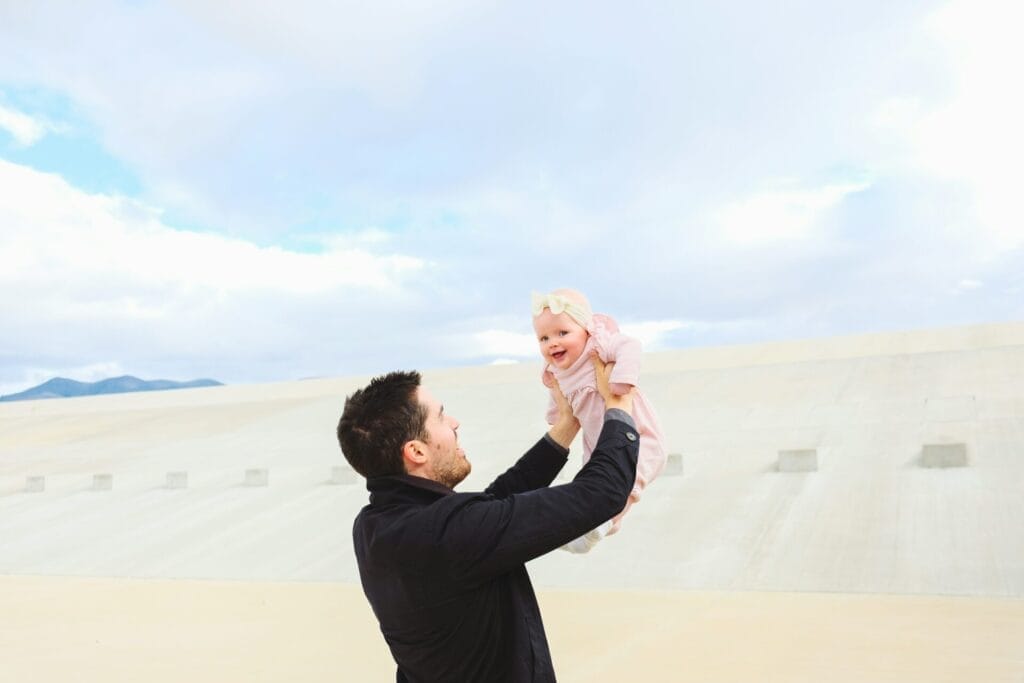
Abuse can manifest in three forms: physical, psychological and emotional. Abusive fathers misuse their power over their children. It is possible that he himself was abused in childhood and this is how he interpreted it as expressing love or there is a superiority complex that manifests itself in this form. In this case, the father takes advantage of the child's vulnerability and inability to defend himself and physically, psychologically or emotionally abuses him, attacking the child's self-confidence.
Psychological abuse or emotional abuse can take the form of mental power games through which the father induces the child to think that he will never be better than him, which is why the child will harbor a great hatred for the parent and will spend his entire life looking for ways to prove the opposite, or he will close himself off and go through life with the fear of not being good enough no matter what he does.
Verbal abuse most often occurs through insults and insults directed at the child, excessive criticism and judgment, threatening the child, or discussions that the child does not have the necessary maturity to understand.
Physical abuse, meaning the physical harming of the child by hitting or using various objects. This behavior of the father may be due to the frustrations he has and takes them out on the child.
Sexual abuse can be expressed through the parent's desire to sleep in the same bed with the minor of the opposite sex, by promising gifts or rewards in exchange for sexual favors, and by threatening the child that he will suffer serious consequences if he tells others what is happening to him.
The relationship you had with your father as a child influences all the relationships you build in the future, as well as the way you relate to life in general.
All these forms of abuse, direct or indirect, leave an imprint on your adult life and bring with them post-traumatic symptoms such as anxiety, cognitive-behavioral disorders, addictions, low self-esteem, and destructive anger.
5 Types of Approaches – How to Approach a Girl and Create a Memorable First Impression
lei129,995 Types of Approaches to a Woman – Electronic Book – English Version
lei199,9950 Women's Congruence Tests
lei0,00Addiction to Unhappiness – Electronic Book – English Version
lei219,90BEST TOPICS TO DISCUSS WITH A WOMAN – Electronic Book – English Version
lei199,99The 5 Emotional Wounds – Discover, Understand and Heal Your Inner Blockages
lei149,00Coaching – Therapy with Miumin Muammer
lei300,00How to Approach a Girl Online? – Ebook
lei249,90How to Approach a Girl on the Street – Complete Guide for Men
lei333,00
Conclusion
The good news is that all of these behaviors can be cured with the help of a therapist.
It's okay to be angry, but it's important not to carry these patterns further and hurt your own children, like he did.
With support, patience, and trust in the process, you will be able to enjoy a peaceful and harmonious life with your happy family!