
Freedom for women It's not a clear destination or a simple concept. It's that often subtle but essential feeling that comes in a moment of silence after an argument with your partner, when you realize you can say "no" without the burden of guilt. Or that day when you express your authentic desires, not just because society encourages you to be independent, but because you've recognized them as a real part of you.
In today's world, where "freedom for women" risks being reduced to images or slogans from Freedom for Women newspaper, its meaning remains much more complex. Freedom is not just about financial independence or social freedom, it is built in those everyday moments of fragile balance between what we want, what we are allowed and what we are willing to discover deep within ourselves.
This article aims to look at female freedom as a living story, as a dynamic that combines responsibility, power and empathy, supported by real experiences, narrated with sincerity and maturity. We will bring to light freedom for women life stories which bring necessary clarity and, at the same time, an invitation to deep personal reflection – because authentic freedom is a continuously cultivated choice, not a universal definition.
Most of the time, in talks or various resources, female freedom is simplified: financial independence, the right to make social decisions or freedom of public expression. However, in the real context, it becomes much deeper and more delicate. Real freedom does not mean just “doing what you want”, but understanding and respecting your own value, finding the balance between your needs and connections with others.
Social autonomy can be easily measured, but inner freedom – the management of emotions and relationships – remains the essential challenge for a satisfying and balanced life.
Financial autonomy versus inner freedom
Many often believe that once a woman achieves financial independence, freedom has been conquered. The reality is more nuanced. Material independence can only be the basis, but without a healthy relationship with one's own emotions – without a mature understanding of one's limits, fears or vulnerabilities – freedom often remains a wide but deserted street, where inner balance is lacking and brings loneliness or conflict.
A woman from a report in the newspaper Freedom for Women experienced exactly this paradox: after building a solid career and financial independence, she felt a lack of harmony in her family and in her relationship with her partner. It was only when she began to manage her inner conflicts, express her vulnerabilities, and accept support in her process that freedom became more than an external state for her – it became a real peace, settled in her heart.
So, material autonomy provides the framework, but true freedom lies in mastering one's own emotional world – because without this balance, freedom can remain a distant ideal or a mere decoration without substance.
Freedom as responsibility and empathy
Often, freedom is confused with rebellion or the unfiltered expression of one's desires – can a free woman be someone who says "I just do what I want," completely ignoring the effects on others?
Beyond the apparent charm of this unlimited freedom, experience shows that the authentic freedom of a mature woman means the power to make responsible choices: care for oneself and others, awareness of the impact of one's own decisions in relationships, and the ability to negotiate healthy boundaries. Freedom is not the breaking of ties, but a power that includes empathy and taking responsibility for oneself and shared balance.
Women who read NEWSPAPER freedom for women life stories I often find in these stories an echo of my own dilemmas: how to balance freedom in a couple or family? How to maintain your authentic independence without building walls? Their testimonies reveal that freedom appears in the power to say “no” when necessary, but also “yes” sincerely – an elegant expression of emotional and relational autonomy.
Thus, feminine freedom is revealed as a delicate construction, a dance between oneself and others, between personal autonomy and the connections that give meaning to life. Excess individualism can lead to isolation, and a freedom understood superficially ends in dissatisfaction. A mature and balanced definition of freedom is therefore essential for women to claim an authentic power that supports them in all aspects of their existence.
This reflection invites the reader to ask: what would a truly integrated freedom look like – something that does not stop at external freedoms, but includes taking responsibility for one's own self and the relationships that define us? Exploring these nuances can, over time, shape a more balanced and meaningful life.
Stories from the Libertatea Newspaper for Women: Reflections on Freedom and Personal Power

From freedom to choose to freedom to live with the choices made
Freedom does not stop at the moment of decision, but continues through the way each person learns to live and assume that choice. It is a delicate balance between the initial freedom and the responsibility that follows: to manage your consequences, to understand the changes within and their impact on relationships. Much of what is found in Freedom for Women newspaper, it turns out that choices are never simple. When a woman decides to change her life, behind the decision appear contradictory emotions, hidden vulnerabilities and a deep need to find herself, beyond social expectations.
A common example is the woman who, after achieving financial freedom, gives up a secure career for an uncertain path. The initial freedom brings a sense of liberation, but the real challenge comes when she learns to manage her loneliness, criticism and internal conflicts related to her new identity, as perceived by her family and partner. Thus, freedom becomes solid only if it is accompanied by the maturity necessary to manage this complexity – otherwise it remains an elusive ideal or a source of frustration.
Stories of emotional survival and personal rediscovery
The beauty of female freedom is also seen in the way women relate to their fragility and the efforts to rebuild their balance after difficult trials. In NEWSPAPER freedom for women life stories We find numerous testimonies in which women not only give up toxic relationships, but also travel long and sensitive paths to rebuild their emotional freedom. It is not a sudden break or instant change, but a careful reconstruction of self-confidence, without the pressure to conform to external patterns.
A relevant case is the story of a woman who left an abusive partner. Although physical freedom was gained, a safe inner space was initially lacking, which brought insecurity and doubts. She needed to accept her vulnerability, give herself time and seek support, redefining the notion of freedom – not as simple loneliness, but as a state of inner fullness. This highlights that freedom is not a fixed destination, but a continuous journey, with ups, downs and reconciliation with oneself, which requires courage and patience.
These real and complex stories show how female liberation goes beyond simply breaking free from constraints, emphasizing the process of confronting personal boundaries and managing relationships. They provide an authentic reference for anyone ready to understand the difficult balance between power and vulnerability.
Moreover, they invite a gentle look at one's own evolution, encouraging patience and authenticity as allies for profound freedom. There is no need for haste, but for a conscious presence, which transforms any difficult stage into a step towards a more balanced and fulfilling life.
Freedom for women does not mean total disconnection, but a continuous negotiation between personal desires and responsibilities to those close to them. In a world that strongly praises independence, it is vital to recognize that mature freedom is expressed most harmoniously when it functions within a healthy relational context that respects both autonomy and emotional bonds.
Autonomy and interdependence: the balance between freedom and connections
A common misconception is that freedom means total isolation or unilateral action. The truth is more subtle: freedom means being aware of the deep human need for connection. A free woman knows her limits and desires, but also appreciates the importance of mutual respect in close relationships. Mature freedom does not reject connections, but places them on a secure foundation of understanding and care for herself and others.
An example from Freedom for Women newspaper tells the story of a woman who, after building financial and emotional independence, understood that her freedom did not exclude concern for the needs of her family and partner. Honest communication, based on a balance between what she can offer and what she needs, replaced conflicts. The result? A relationship in which autonomy grew in tandem with connection.
Emotions, limits and responsibility in freedom
Freedom is not an unlimited license to do whatever you want without considering the consequences. Exercising it involves setting boundaries that protect the emotional integrity of both the woman and those close to her. A free woman says “no” respectfully, not arrogantly or coldly. Setting healthy boundaries is a sign of inner strength and emotional maturity.
A common case is that of a woman who honestly assumed her needs in a relationship, after years of compromising this freedom. Being open about boundaries, desires, and fears avoided resentment and fostered authentic closeness. Thus, responsible freedom does not destroy, but transforms relationships into spaces for growth for both.
Without this balance, freedom can become an excuse for selfishness or isolation. When autonomy is no longer accompanied by dialogue or empathy, the relationship suffers. Conflict and lack of real negotiation inevitably arise. By viewing freedom as a collaborative process, not as a rigid state, we pave the way for balance between self and others.
As you reflect on your life, you may recognize times when freedom has been confused with avoiding responsibility or dialogue. The mature understanding that freedom also entails relational responsibility is key to balancing independence and connection.
Current challenges in the quest for female freedom: appearance versus essence
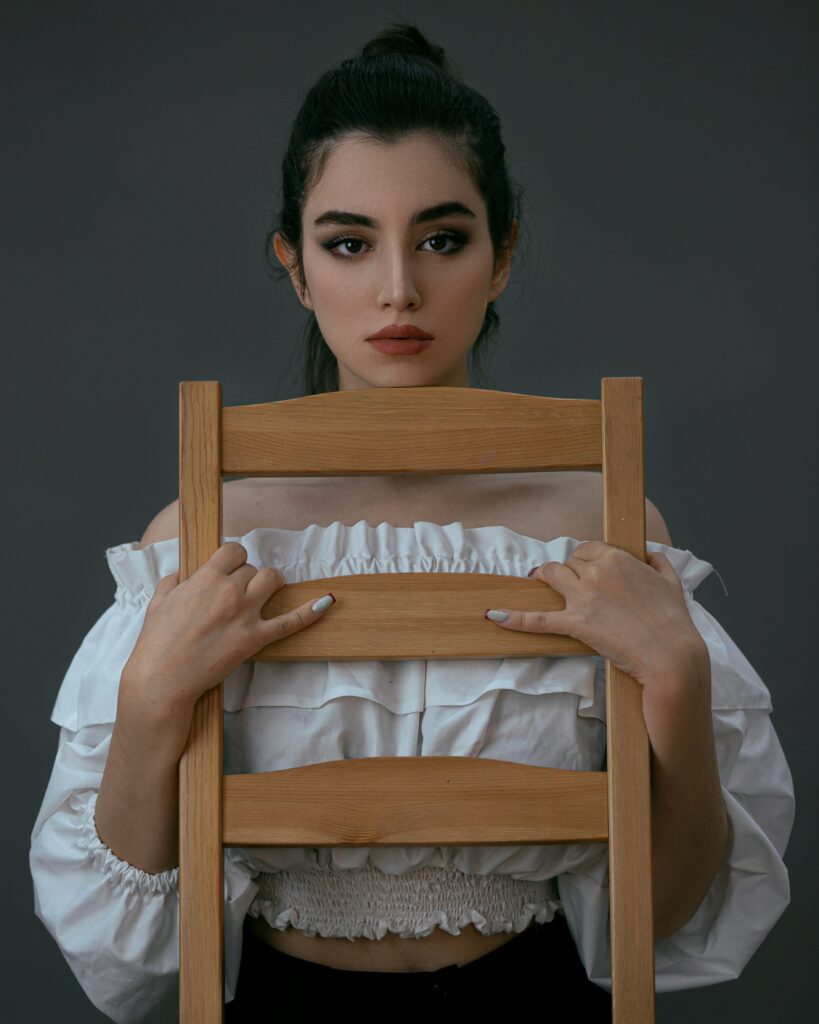
Freedom in the age of social networks: between image and reality
In an age where social media platforms are rapidly shaping perceptions of identity and freedom, women are challenged to distinguish between authentic freedom and the idealized, often superficial image promoted online. Often, “freedom for women” is presented as an external ideal – a flashy lifestyle, apparent financial independence, or expressions that seem revolutionary but do not reflect inner balance. The problem is not freedom itself, but how it is often treated superficially, as a goal that is difficult to achieve in relation to the complexities of real life.
An example from Freedom for Women newspaper tells the story of a woman who lived for a long time with the impression that freedom meant completely independent action, at the expense of close relationships. The powerful image she projected online did not correspond to the tensions and loneliness in real life, a situation common to women who see freedom only as a collection of external acts. It was only when she began to integrate emotions and honest conversations that she found the real meaning and stability of freedom.
The common risk is that many women feel disappointed when reality does not live up to the ideal expectations promoted online. The impulse to imitate a perfect model can generate identity crises, because real freedom requires assuming limits, taking responsibility, and living with authentic imperfection.
Escaping stereotypes: a call for mature and authentic freedom
In discourses about women's freedom, worn-out clichés persist: women must always be "strong", "independent", "rebellious" at all costs. These stereotypes reduce the potential for profound freedom to a social spectacle. As a result, many women come to consider entrepreneurship, assumed loneliness or avoidance of relationships as synonymous with freedom, without understanding that these can be refuges far from true self-assertion.
Another reflection from Freedom for women life stories tells the story of a woman who built a social media presence as a symbol of an external freedom: vacations, style, nonconformity and flexible friendships. However, over time, the void left by this apparent freedom led her to embark on an introspective process, searching for her true voice. She realized that real freedom does not come from an imposed social model, but from accepting vulnerabilities, setting clear boundaries and consciously choosing her own path.
Thus, freedom for women becomes a mature act of rejecting stereotypes and a careful cultivation of harmony between oneself and the world. In relationships, true freedom is not an emancipation without ties, but the conscious decision to remain honest and present, avoiding superficialities that do not reflect the depth of inner experience.
I invite the reader to look critically at the often overlooked discourses, building a personal vision of freedom that encompasses both the social and the emotional and spiritual dimensions. This is the mature freedom that brings peace and integrity to everyday life, not just the illusion of fleeting power.
Integrating freedom into everyday life and relationships: practical perspectives
Practices that support authentic freedom
Freedom for women is not an abstract ideal, but an experience that is shaped and reaffirmed daily through conscious gestures and inner balance. It all starts with self-knowledge: knowing what you really need, what values you are not willing to negotiate, and where your emotional and behavioral limits are. A concrete step is to establish clear boundaries, whether in time management or in the degree of involvement in external responsibilities. Sometimes, freedom means having the courage to say “no” without fear, to refuse compromises that threaten your integrity.
Another pillar is awareness of emotions – not as barriers, but as signals of your inner state. Managing emotions involves not repressing them, but expressing them authentically, with respect for yourself and others. This daily practice – through reflection, journaling or honest dialogue – is the food for balance, which protects you from automatic reactions and unnecessary anxieties.
Prioritizing your personal values involves letting go of the desire to please everyone. In everyday life, this means consciously choosing to spend time with those who respect your dignity and avoiding situations that drain your energy unnecessarily.
Freedom in relationships: being free and connected
As you integrate authentic freedom, you will discover that it does not preclude deep emotional connection. On the contrary, real freedom requires a continuous adjustment between personal autonomy and respect for the needs of those around you. In relationships, honest and empathetic communication becomes essential to maintaining this harmony. Saying what you feel and think without fear, but with care for the impact, is an art that is learned with patience.
An example from the article "Excessive Makeup in Women: Emotional Signals, RedFlags, and How You Can Support the Relationship" shows how external gestures often hide internal dilemmas. Recognizing these messages and opening an honest, non-accusatory dialogue is a concrete way in which freedom and empathy intertwine in a couple. Thus, freedom does not mean giving up connection, but a bond that grows through understanding.
It's important to see freedom not as a fixed state or total independence, but as an ongoing process: you choose to let go of what doesn't serve you and accept clear compromises that don't nullify you. In relationships, this involves knowing when to say "no," truly listening, without losing yourself.
Think about your own days: where is there room for your freedom? How do you express your needs and boundaries without fear? And how do you stay connected with your loved ones without losing control? The answers take time and honesty, but they support a mature, balanced, elegant freedom, anchored in the reality of relationships and everyday life.
Emotional maturity must be at the forefront — without it, freedom often remains a fragile concept or an illusion that does not withstand challenges. True freedom is measured in the ability to make clear and responsible choices that respect both self and others. This power is discreet, without noise, marking a calm and stable presence that knows when to say “no” and when to give up — without resentment, with peace and dignity.
Mature woman: freedom through inner balance
Emotional maturity, often ignored in discussions of women's freedom, is the very essence of deep freedom. It generates true autonomy, not just simple social or material independence. The mature woman recognizes that freedom is also a responsibility. She learns to navigate her emotions with gentleness and to show empathy to those close to her. Her freedom does not isolate, but creates authentic connections, allowing honest space in relationships.
For example, a woman who knows how to say, “I don’t accept this behavior” or “I need to step back to maintain my balance” demonstrates a strength that comes from knowing her own limits. It is a calm and responsible choice that protects integrity without destroying relationships, but rather strengthens them through honesty.
Assumption and release: essential steps
Taking responsibility is one of the most difficult, but also the most liberating steps towards freedom. Recognizing that your own path is your responsibility, with its challenges and consequences, is not a burden, but strength. It is the chance to let go of expectations, toxic models or patterns that have compromised your inner balance. Letting go is not weakness, but courage – to say “no” to relationships and situations that consume your energy without real fruit.
Reading the article Mature woman highlights how assumption and surrender build an elegant and solid freedom, one that does not seek approval, but respect and understanding. It is a freedom that is anchored in one's own values and in carefully cultivated relationships.
By viewing emotional maturity as an investment in long-term freedom, every woman can begin to transform the outward forms of freedom into the silent, profound power that shapes authentic life and healthy relationships.
Final reflections: freedom and responsible balance
Freedom for women goes far beyond simple financial or social autonomy. It is built day by day, through the careful balance between autonomy, emotional responsibility, and authentic connections with others. Freedom does not mean breaking ties, but a mature choice in which self-care coexists with empathy and respect for those close to us.
On the path to freedom, emotional maturity becomes the foundation that gives quiet strength and conscious choices, without noise or exaggeration. Those recounted in the pages the newspaper Freedom for Women shows that freedom is not the end, but a continuous process of assuming and discovering one's own value.
Thus, each woman is challenged to define a personal freedom that encompasses the natural balance between herself and her relationships. Beyond imposed models, true freedom is a path of quiet courage, dedicated to integrity and respect – a freedom in which elegance and inner strength intertwine to create a life of meaning and depth.
Frequently Asked Questions about Women's Freedom
How can I identify the real dimensions of freedom in my life, beyond the superficial aspects?
Identifying the authentic dimensions of freedom begins with honest introspection about what you feel and experience inside. Freedom for women is not just about financial or social independence, it also includes emotional freedom, the ability to express your needs and values without fear of judgment or rejection. It requires recognizing the moments when you truly choose for yourself, not under the pressure of external expectations.
A clear signal is how you handle frustrations, conflicts, or responsibilities in your relationships. If you feel burdened or disobeyed by yourself, these indicate partial freedom. By reflecting on the stories in the newspaper Freedom for Women, you can find concrete examples that help you differentiate real freedom from mere appearances.
Why is a woman's freedom not limited to financial or social independence?
Financial and social independence are important components, but not sufficient without an inner freedom that ensures the balance between mind and emotions. Freedom for women relies on an authentic power, which does not exclude responsibility and maturity in choosing the way of life. Being free does not mean acting only on impulse or rejecting all ties, but having the ability to establish healthy boundaries and maintain fairness towards yourself and others.
Real stories show that often women with financial independence still face emotional blockages or unresolved conflicts in relationships, which indicates that true freedom is much more complex. It means a constant balance between personal autonomy and connection with others.
How can I balance my need for freedom with the responsibilities and bonds in my relationships?
The balance between freedom and responsibility in relationships comes from clear communication and accepting your own boundaries without toxic compromises. Freedom for women does not exclude deep connection with those around you, but rather values it through mutual respect and empathy. It is essential to honestly express your needs and listen to the needs of others, thus building an ongoing negotiation. Sometimes, you will need to give up some superficial freedoms to preserve the integrity of important relationships or choose moments of distance to recharge.
This maturity in freedom, illustrated in articles like "Mature Woman" or through stories from the newspaper Freedom for Women, can give you the confidence to live authentically, without sacrificing either connection or autonomy.
What role does emotional maturity play in experiencing authentic and lasting freedom?
Emotional maturity is a fundamental condition for true and sustainable freedom. It involves the ability to understand and manage your emotions, to let go of limiting patterns and expectations, and to assume the consequences of your own choices with calmness and responsibility.
Freedom for women in this sense means being strong without being rigid, saying "no" respectfully, and choosing with discernment not out of fear, but out of self-knowledge. The mature woman thus becomes a model of balanced freedom, and her goal is not to escape from constraints, but to consciously choose them.
This perspective, detailed in the lines dedicated to maturity, helps overcome illusions and consolidate a freedom that brings inner peace and harmony to relationships.
A journey to authentic freedom
Freedom for women is not a simple destination or a fixed ideal, but a process born from the delicate balance between the inner self and the nature of the relationships we live in. I invite you to reflect on your own experiences and how you can cultivate this freedom in your daily life, with respect for yourself and for those around you. In this exploration, every story, every feeling, becomes a mirror of your real power and the way you choose to assert yourself in the world.
Recommended external sources
- PubMed — biomedical studies and psychology
- APA PsycNet — psychology
- WHO — health and official guidelines
- Cochrane Library — evidence-based reviews
- Freedom for women