
Quick answer: The best psychological films are those that are not only based on action, but on the minds of the characters: trauma, memory, guilt, obsession, identity, manipulation, fear, desire, toxic relationships or the confusion between reality and illusion. For starters, you can see Inception, Shutter Island, Eternal Sunshine of the Spotless Mind, Black Swan, Gone Girl, Memento, P, The Invisible Man, Perfect Blue and The Father.
This article reconstructs and expands the original material on psychological films, which included examples such as Inception, Eternal Sunshine of the Spotless Mind, Black Swan, A Beautiful Mind, Shutter Island, P, The Lighthouse, Uncut gems, Joker and The Invisible ManThe new version is designed as a complete guide for the reader who is looking for not just a list of films, but also clear criteria: what to see, why it's worth it, what they can learn and how to choose the right film depending on their mood.
In addition, this material is semantically separated from the article about movies about seduction. There we talk about charisma, presence, attraction and male-female dynamics. Here we talk about mind, trauma, reality, identity, obsession, difficult relationships and psychological mechanisms.
Content
- What are psychological films?
- Top 10 psychological films to watch for the first time
- 70 recommended psychological films
- Old psychological movies
- New psychological movies
- Netflix psychological movies
- Psychological films inspired by true events
- Psychological horror films
- What do studies say about movies, empathy and psychology?
- The MIND method for conscious viewing
- Frequent asked questions (FAQs)
What are psychological films?
Psychological films are films in which the main tension comes from within the characters: thoughts, traumas, hidden desires, moral contradictions, obsessions, defense mechanisms, identity confusions or distorted perceptions of reality. It is not only what happens on the outside that matters, but especially how the character interprets what happens to him.
A good psychological film makes you ask yourself: "What is real?", "Why does the character react this way?", "What wound drives this choice?", "Where is the line between truth, projection and psychic defense?". That is why some psychological films overlap with thrillers, horror, dramas, science fiction or films inspired by true events.
Not every dark film is psychological. A film can have crime, suspense, or mystery, but still be an action story. It becomes psychological when the stakes are the mind: memory, guilt, fear, desire, identity, the relationship with the self, and how man constructs his reality.
On a personal development site, this theme makes sense because psychological films can become a mirror. They are not a substitute for therapy, coaching or deep work with yourself, but they can open up questions. If a film strongly activates you, it can be useful to notice what it has touched on: fear of abandonment, shame, control, addiction, narcissism, attachment styles or the concept of shadow.
Top 10 psychological films to watch for the first time
If you want a quick selection, start with these ten. They're well-known enough to be accessible, but deep enough to not just be entertainment.
- Shutter Island – trauma, denial and constructed reality.
- Inception – dream, guilt, memory and identity.
- Eternal Sunshine of the Spotless Mind – love, separation and the pain of memories.
- Black Swan – perfectionism, competition and inner division.
- Gone Girl – public image, manipulation and relational warfare.
- Memento – memory, truth and self-deception.
- The Invisible Man – abuse, gaslighting and the fear of not being believed.
- P – social class, humiliation and psychological tension.
- Perfect Blue – identity, celebrity and psychic rupture.
- The Father – dementia, loss of landmarks and painful empathy.
15 psychological films briefly explained
1 Inception
An excellent psychological film for the reader who wants spectacle, but also ideas. Beyond the effects, the central theme is guilt: what does the mind do when it cannot accept loss? Cobb does not only enter the dreams of others, but also his own defense mechanisms.
What you can learn: The useful lesson: if you run away from real emotion, your subconscious will turn it into decoration, conflict, and sabotage. Not everything that seems like strategy is healing.

2. Eternal Sunshine of the Spotless Mind
A film about love, memory and the human tendency to want to erase pain without losing meaning. Joel and Clementine are not just a couple, but two different ways of running away from the wound.
What you can learn: The useful lesson: sometimes it's not the relationship that needs to be erased, but the pattern through which we repeat it without consciousness.

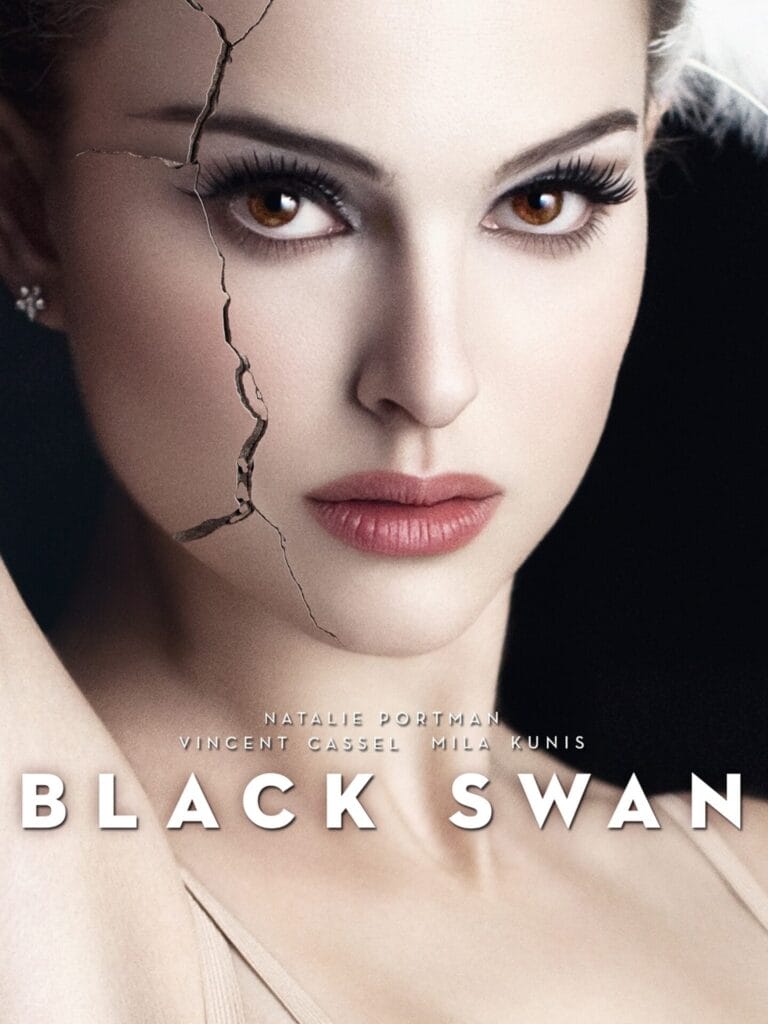
3.Black Swan
A tough film about perfectionism, identity and the body. Nina wants to be perfect, but perfection becomes a form of self-aggression. The more she tries to control her image, the more fragile her psyche becomes.
What you can learn: The useful lesson: discipline without humanity can become inner violence.
4. A Beautiful Mind
A film inspired by the life of John Nash, important for the way it brings to the fore the brilliant mind, love, mental illness and dignity. It is not a clinical textbook, but it can open more mature conversations about mental health.
What you can learn: The useful lesson: people are not just their symptoms, and real support does not mean denying reality.

5. Shutter Island
A thriller built around trauma and psychic defenses, the film works because it makes you suspicious of the outside world, then shows you that sometimes the mind creates a bearable story when the truth is too painful.
What you can learn: The useful lesson: denial may protect in the short term, but its cost is losing touch with reality.

6. Parasite
A social psychological film, not just a thriller. Bong Joon-ho shows how shame, lack, envy and class differences can explode when people live under too much pressure.
What you can learn: The useful lesson: individual psychology cannot always be separated from the social environment in which man survives.
7 Joker
An uncomfortable film about alienation, humiliation, and fractured identity. It is valuable as food for thought, but it must be viewed with discernment: explaining a character's pain does not justify their violence.
What you can learn: The useful lesson: unseen suffering can deform a person, but responsibility for behavior remains necessary.
8. The Invisible Man
One of the most relevant modern psychological films about abuse and gaslighting. The main character's fear comes not only from danger, but also from the fact that the people around her don't believe her.
What you can learn: The useful lesson: some forms of control become more dangerous precisely because they are difficult to demonstrate.
9. Gone Girl
A film about image, marriage, manipulation and the roles people play in public. It's not about healthy love, but about what happens when a relationship becomes a stage, a strategy and a reputation war.
What you can learn: The useful lesson: when two people no longer seek truth, but victory, the relationship becomes a psychological process of destruction.
10. Reminder
A cinematic experience that simulates the confusion of a mind without recent memory. The film is excellent for understanding how much identity depends on the story we tell ourselves about ourselves.
What you can learn: The useful lesson: when memory is broken, man clings to clues, but clues can be manipulated.
11. Fight Club
An important film for men, but often misunderstood. It is not an advertisement for violence, but an X-ray of a masculinity without direction, without mature community and without touch with authentic with pain.
What you can learn: The useful lesson: anger can give the feeling of power, but without awareness it becomes self-destructive.
12. Perfect Blue
A quintessential psychological anime about celebrity, objectification, and identity fraying under the pressure of public image. It's especially relevant in the age of social media.
What you can learn: The useful lesson: when you live too much through images, your inner reality begins to defend itself or fracture.
13. Whiplash
A film about ambition, talent, and abuse disguised as mentorship. It's great for discussing performance, limits, and the psychological price of external validation.
What you can learn: The useful lesson: a good mentor challenges you without crushing your dignity.
14.The Father
A profound film about dementia, not through explanation, but through experience. The viewer feels the confusion, frustration, and loss of direction.
What you can learn: The useful lesson: some films don't teach us through information, but through direct empathy.
15. The Babadook
A psychological horror about grief, motherhood, and emotions that become monsters when denied. The film's strength lies in its metaphor.
What you can learn: The useful lesson: what we don't integrate returns in forms that are increasingly difficult to control.
70 recommended psychological films
The list below is built as a map, not as a rigid ranking. Some films are psychological thrillers, others psychological horror, psychological drama, social film or science fiction with psychological stakes. Choose according to the theme that interests you.
| # | Film | Subject | Why is it worth it? |
|---|---|---|---|
| 1 | Inception (2010) | dream, memory, reality | for the way it transforms the subconscious into a maze of guilt and choices. |
| 2 | Eternal Sunshine of the Spotless Mind (2004) | memory and love | because it shows that the pain of a relationship cannot be erased without also losing its meaning. |
| 3 | Black Swan (2010) | perfectionism and identity | for obsession, competition and the rupture between the ideal image and inner fragility. |
| 4 | A Beautiful Mind (2001) | genius and mental illness | for a human perspective on the mind, love, and long-term support. |
| 5 | Shutter Island (2010) | trauma and denial | for the way it puts the viewer inside a mind that is defending itself from the truth. |
| 6 | P (2019) | social class and humiliation | for the psychological tension between desire, shame, status and survival. |
| 7 | The Lighthouse (2019) | isolation and delirium | for the claustrophobic atmosphere and the gradual degradation of reality. |
| 8 | Uncut gems (2019) | impulsivity and addiction | for the portrait of a man caught between risk, dopamine, debt and self-sabotage. |
| 9 | Joker (2019) | social alienation | for the way it combines marginalization, anger, and identity rupture. |
| 10 | The Invisible Man (2020) | abuse and gaslighting | because it transforms the fear of not being believed into a contemporary psychological thriller. |
| 11 | Gone Girl (2014) | manipulation and public image | for the game between marriage, narcissism, media and control. |
| 12 | Se7en (1995) | moral obsession | for the dark atmosphere and psychology of an ideology-driven criminal. |
| 13 | Memento (2000) | memory and identity | for the narrative structure that forces you to feel the protagonist's confusion. |
| 14 | The Machinist (2004) | guilt and insomnia | for the physical and psychological degradation caused by repressed guilt. |
| 15 | Fight Club (1999) | male identity | for the crisis of meaning, dissociation and critique of a masculinity emptied of direction. |
| 16 | Taxi Driver (1976) | loneliness and radicalization | for the portrait of urban isolation and the mind sliding towards violence. |
| 17 | Psycho (1960) | identity and trauma | for its historical impact on psychological thrillers and modern horror. |
| 18 | Vertigo (1958) | obsession and projection | for the way desire turns a real person into a controlled fantasy. |
| 19 | Rear Window (1954) | voyeurism and suspicion | for the tension created by observation, isolation and interpretation. |
| 20 | The Silence of the Lambs (1991) | profiling and manipulation | for the psychological dynamics between Clarice Starling and Hannibal Lecter. |
| 21 | Mulholland Drive (2001) | dream and identity | for Lynch's ambiguity and the way desire rewrites reality. |
| 22 | Perfect Blue (1997) | identity and obsession | for celebrity anxiety, projection, and confusion between role and self. |
| 23 | Oldboy (2003) | revenge and trauma | for the psychological brutality of manipulation and the secret consequences of the past. |
| 24 | The Handmaiden (2016) | manipulation and desire | for the sophisticated play of perspective, power and liberation. |
| 25 | Burning (2018) | ambiguity and envy | for the slow tension between social class, obsession and moral ambiguity. |
| 26 | T (2014) | mourning and motherhood | for the powerful metaphor of pain that doesn't go away when you deny it. |
| 27 | Get Out (2017) | control and racism | for the clever way it uses horror as social and psychological analysis. |
| 28 | Hereditary (2018) | family trauma | for the atmosphere of helplessness and intergenerational transmission of pain. |
| 29 | The Shining (1980) | isolation and violence | for psychic degradation in a closed space, loaded with symbols. |
| 30 | Rosemary's Baby (1968) | paranoia and control | for the feeling of captivity in a reality that no one validates. |
| 31 | Requiem for a Dream (2000) | addiction and illusion | for one of the toughest cinematic descents into addiction. |
| 32 | Donnie Darko (2001) | adolescence and reality | for the combination of alienation, time, anxiety and destiny. |
| 33 | Nightcrawler (2014) | social psychopathy | for a character who turns a lack of empathy into a career. |
| 34 | Nocturnal Animals (2016) | regret and symbolic revenge | for the overlap between fiction, guilt, and old wounds. |
| 35 | Prisoners (2013) | moral despair | for the tough question: how far do you go when fear drives your decisions? |
| 36 | Zodiac (2007) | investigative obsession | for the way an investigation can consume the identity of those involved. |
| 37 | The Game (1997) | control and paranoia | for the question of whether loss of control can become psychological initiation. |
| 38 | ENEMY (2013) | double and anxiety | for the oppressive symbolism and sense of fractured identity. |
| 39 | The Prestige (2006) | obsession and sacrifice | for the competition that led to the destruction of one's own life. |
| 40 | Interstellar (2014) | loss and time | for the emotional weight of choices, longing, and parental guilt. |
| 41 | The Father (2020) | dementia and perspective | for the painful way it places you in the confusion of a lost mind. |
| 42 | Whiplash (2014) | ambition and abuse | for the question of whether performance is worth humiliation and emotional destruction. |
| 43 | Birdman (2014) | ego and validation | for an artist caught between public identity and inner emptiness. |
| 44 | T (1998) | constructed reality | for reflection on control, authenticity and life as a spectacle. |
| 45 | Her (2013) | loneliness and attachment | for the love projected into a digital presence that seems to understand everything. |
| 46 | Ex Machina (2014) | control and conscience | for the subtle dynamics between seduction, artificial intelligence and manipulation. |
| 47 | Annihilation (2018) | self-destruction and transformation | for a visual metaphor about identity and the urge to dissolve. |
| 48 | I'm Thinking of Ending Things (2020) | loneliness and memory | for the atmosphere of unsettling dream and diluted identity. |
| 49 | horse girl (2020) | perception and vulnerability | for the confusion between reality, isolation and the need for meaning. |
| 50 | The Killing of a Sacred Deer (2017) | guilt and absurdity | for the cold, almost mythological morality of punishment. |
| 51 | Dogtooth (2009) | family control | for the extreme experiment about language, reality and parental manipulation. |
| 52 | Human (1966) | identity and silence | for one of the most profound explorations of the psychic fusion between two women. |
| 53 | Repulsion (1965) | isolation and psychosis | for the slow deterioration of perception in a stifling domestic space. |
| 54 | Jacob's Ladder (1990) | trauma and hallucination | for the ambiguity between war trauma, death, and fractured mind. |
| 55 | Pi (1998) | obsession and meaning | for the manic search for an order hidden in chaos. |
| 56 | Mother! (2017) | anxiety and sacrifice | for the symbolic intensity and constant psychological discomfort. |
| 57 | The Others (2001) | mourning and denial | for the gothic atmosphere and the revelation related to the impossibility of acceptance. |
| 58 | The Sixth Sense (1999) | trauma and communication | for how fear becomes a bridge to healing. |
| 59 | Misery (1990) | obsession and captivity | for the terrifying relationship between fanaticism, control and artistic creation. |
| 60 | Black Mirror: Bandersnatch (2018) | choice and control | for the play between free will, interactive story and manipulation. |
| 61 | Gerald's Game (2017) | trauma and survival | for direct confrontation with the past in a situation of captivity. |
| 62 | Split (2016) | fragmented identity | for a controversial thriller about dissociation, fear and survival. |
| 63 | The Gift (2015) | guilt and consequences | for the way the unclear past comes back into adult relationships. |
| 64 | Martha Marcy May Marlene (2011) | cult and trauma | for its subtle portrayal of sectarian manipulation and hypervigilance. |
| 65 | The Conversation (1974) | paranoia and guilt | for a character consumed by surveillance and interpretation. |
| 66 | Cure (1997) | hypnosis and violence | for one of the most unsettling Japanese psychological thrillers. |
| 67 | A Tale of Two Sisters (2003) | family and trauma | for the Korean story in which horror becomes the language of psychological pain. |
| 68 | The Platform (2019) | morality and survival | for the social allegory about lack, hierarchy, and moral degradation. |
| 69 | Fractured (2019) | denial and panic | for the tension between loss, paranoia and psychic self-defense. |
| 70 | The Call (2020) | trauma and time | for a Korean thriller about consequences, control and overlapping realities. |
Old psychological films that have remained relevant
Old films are important because many of the modern themes have already been explored there: obsession, the gaze, guilt, the double, paranoia, confinement, and the fear of one's own mind. If you want to understand the roots of the genre, start with Hitchcock, Bergman, Polanski, Kubrick, and Scorsese.
- Psycho – still operates through tension, suggestion, and fractured identity.
- Vertigo – essential for understanding romantic obsession and projection.
- Rear Window – about voyeurism, interpretation, and the need to control the story.
- Human – for those who want more artistic and difficult psychological cinema.
- Taxi Driver – about loneliness, alienation and the radicalization of the mind.
- The Shining – isolation, violence and psychological degradation.
- Repulsion – a disturbing descent into psychic fragility.
New psychological movies
New psychological films bring contemporary themes: social media, digital loneliness, abusive relationships, anxiety, control, status, public identity, and the pressure to perform. They are not necessarily “better” than the old ones, but they speak more directly to the language of our age.
- The Invisible Man – excellent for discussing psychological abuse and gaslighting.
- P – social psychology, shame and class tension.
- Joker – alienation, humiliation, anger and identity.
- The Lighthouse – isolation, masculinity, delirium and competition.
- Uncut gems – risk addiction and impulsivity.
- I have Thinking of Ending Things – loneliness, memory and unstable reality.
- The Father – subjective experience of cognitive loss.
- Annihilation – transformation, trauma and symbolic self-destruction.
Netflix Psychological Movies: What to Look for and What to Check Out
The Netflix library varies from country to country and changes periodically. Therefore, it is not accurate to promise that a particular movie is permanently available in Romania. The safest wording is: "check availability in your Netflix account."
As a guide, on Netflix or other streaming platforms it's worth looking for titles and terms like: psychological thriller, mind bending, dark drama, crime thrillers, horror psychological, mystery thrillerAmong the titles commonly associated with streaming at different times, it's worth checking out: Fractured, Gerald's Game, horse girl, The Platform, The Call, I have Thinking of Ending Things, Uncut gems, The Invisible Guest and Black Mirror: Bandersnatch.
Psychological films inspired by true events
Films inspired by true events have a special power because they take psychology out of the symbolic realm and into history, biography, or true crime. However, they should not be confused with documentaries. A feature film may modify, condense, or dramatize events for narrative effect.
- A Beautiful Mind – genius, schizophrenia, love and public life.
- Zodiac – the obsession of an investigation that consumes people for years.
- foxcatcher – power, control and relationships distorted by money and status.
- Monster – trauma, violence and marginalization.
- The Imitation Game – genius, isolation and historical pressure.
- Girl, Interrupted – mental health, identity and institutionalization.
- Changeling – the helplessness of a woman in the face of an authority that denies her reality.
Psychological horror films
Psychological horror is different from horror based solely on scares. Here, the fear comes from within: grief, guilt, memory, family, shame, paranoia, isolation, or lack of control over one's own mind.
- T – grief becomes a monster when it is not integrated.
- Hereditary – family trauma and the sense of unavoidable destiny.
- The Shining – isolation amplifies latent violence.
- Rosemary's Baby – paranoia, body, pregnancy and social control.
- A Tale of Two Sisters – Korean horror about family, trauma and fragmented truth.
- Get Out – social psychological horror about racism and control.
- Perfect Blue – identity, obsession and public image anxiety.
Which psychological films should you choose depending on your mood?
Not all psychological films are appropriate at all times. If you are going through a vulnerable time, some films may be too intense. Choose wisely.
- If you want to understand trauma: Shutter Island, T, Gerald's Game, Martha Marcy May Marlene.
- If you want to understand obsession: Black Swan, Vertigo, The Prestige, Nightcrawler.
- If you want to understand manipulation: Gone Girl, The Invisible Man, Ex Machina, The Gift.
- If you want to understand identity: Fight Club, Perfect Blue, Human, ENEMY.
- If you want to understand relationships: Eternal Sunshine of the Spotless Mind, Her, Nocturnal Animals.
- If you want a difficult but worthwhile film: The Father, Requiem for a Dream, Taxi Driver.
What do studies say about movies, empathy and psychology?
Psychological films are not therapy in themselves, but they can support reflection. In psychology there is the concept of narrative transport: the state in which you are absorbed in a story, become emotionally involved, imagine the world of the characters, and come to temporarily see reality through their eyes. Research on narrative transport in films discusses dimensions such as empathy, immersion, and belief change.
A scoping review of cinema and video interventions shows that film has been used in educational, therapeutic, and clinical contexts, but the results depend greatly on the method, guidance, and purpose. This means that a film becomes more valuable when followed by reflection, discussion, or writing, not just passive consumption.
There is also research on movies and empathy. For example, some studies show that watching selected movies can have positive, but often temporary, effects on empathy. Therefore, this article does not promise that a movie will automatically change you. A movie can open a door; you have to walk through it through introspection, dialogue, and action.
In personal development work, psychological films can be used as an exercise in self-observation. After the film, ask yourself: “Who did I empathize with?”, “Which character did I judge quickly?”, “What emotion did I avoid?”, “What scene activated me?”, “What pattern in my life resembles what I saw?”. You can link this practice to the exercises in positive affirmations, quotes about life or types of attitude.
The MIND method for watching psychological films consciously
To turn viewing into a reflection exercise, use the method MIND:
- M – Reason: Why do I choose this movie? Do I want suspense, catharsis, understanding, confrontation or relaxation?
- I – Identification: Which character do I identify with and why?
- N – Emotional node: Which scene made my stomach clench, made me angry, sad, or ashamed?
- T – Pattern: What psychological pattern do I see: control, avoidance, abandonment, perfectionism, dependency, manipulation?
- E – Exercise: What can I do concretely after the film? A note in the journal, an honest conversation, a clearer boundary, a topic taken to coaching or therapy.
14-day viewing plan
If you want to turn your list into a schedule, don't try to watch everything in one weekend. Psychological movies can be intense. It's better to watch fewer, but you'll process them better.
- Day 1: Eternal Sunshine of the Spotless Mind – write about a memory you wanted to erase.
- Day 2: Pause and journal.
- Day 3: Shutter Island – notice what denial means.
- Day 4: Read about attachment styles.
- Day 5: Black Swan – note where you confuse performance with personal value.
- Day 6: Pause, walk, reflection.
- Day 7: Gone Girl – notice the difference between image and real intimacy.
- Day 8: Read about narcissism and control relationships.
- Day 9: The Father – trains empathy, not cold analysis.
- Day 10: Break from heavy movies.
- Day 11: Whiplash – ask yourself what the price of limitless ambition is.
- Day 12: Read about the concept of shadow.
- Day 13: P – reflects on shame, status and comparison.
- Day 14: Write down your top 5 personal lessons.
Mistakes when looking for psychological films
- Only choose very tough movies. Intensity does not automatically mean depth.
- Confusing psychological with horror. Some horror films are psychological, but not all.
- To watch passively. If you want development, write down what touched you.
- To turn the film into a diagnosis. A difficult character is not automatically "narcissistic," "psychopath," or "toxic."
- To push yourself when you are vulnerable. If a movie destabilizes you, stop it and come back when you have the resources.
Recommended resources from BarbatulSuperior
If the films have made you think, you can continue with these resources:
- Movies about seduction – for charisma, attraction and male-female dynamics.
- Attachment styles – to understand fear of abandonment, avoidance, and anxious-avoidant relationships.
- Narcissism and narcissist – for control and image dynamics.
- Karmic relationship – for readers who also look at relationships through a spiritual lens.
- The concept of shadow – for the part of you that you reject, but that influences your choices.
- Free materials – if you want to go deeper practically.
- The Emotional Wounds Quiz – if you want a starting point in self-observation.
Frequently asked questions about psychological films
What are the best psychological movies?
For starters, the best options are Shutter Island, Inception, Black Swan, Gone Girl, Memento, Eternal Sunshine of the Spotless Mind, P, The Invisible Man, The Father and Perfect Blue.
What is the difference between psychological thriller and psychological film?
A psychological thriller uses suspense, danger, and mystery to explore the minds of its characters. A psychological film is broader: it can be a drama, horror, science fiction, biography, or social film, as long as the main focus is on the human psyche.
What psychological movies are on Netflix?
Availability varies by country and time period. Check directly in your Netflix account. Search for terms like psychological thriller, mind bending, mystery thriller or dark drama.
Are psychological films good for personal development?
They can be helpful if you look at them consciously. They are not a replacement for therapy, but they can trigger questions about fear, attachment, shame, identity, boundaries, and relationship patterns.
What psychological movie should I watch if I want something about relationships?
Choose Eternal Sunshine of the Spotless Mind, Gone Girl, Her, Nocturnal Animals or The Invisible Man, depending on how intense you want the movie to be.
What psychological movie should I watch if I want something about trauma?
You can start with Shutter Island, T, Gerald's Game, The Father or Martha Marcy May MarleneIf you are in a sensitive period, choose carefully.
Why am I attracted to psychological films?
They can attract you because they offer suspense, mystery, emotion, and reflection. Sometimes they attract us precisely because they touch on personal themes: control, abandonment, guilt, shame, desire, fear, or identity.
Can psychological films be dangerous?
Not automatically, but they can be overwhelming. If you're dealing with severe anxiety, recent trauma, or depression, choose gentler movies and avoid intense marathons.
Sources and studies
- Netflix Help Center – library varies by country and changes periodically
- Narrative transportation in movies – a study on empathy, immersion and belief revision
- Through the Looking Glass – scoping review about cinema and video interventions
- Does watching a movie improve empathy? – study on movies and empathy
- Cinema therapy and film as an educational tool in psychiatry
- Rotten Tomatoes – examples of psychological thrillers Certified Fresh
- IMDb – Psychological Thriller Interest
- Google Search Central – Article structured data
Conclusion
Psychological films are more than just dark stories. They are mirrors of the human mind. Some confront you with trauma, others with desire, shame, control, addiction, loneliness, or the need for meaning. A good psychological film doesn't just give you an intense evening; it leaves you with a question that stays with you.
If you want to use this list maturely, don't just tick off the movies as a challenge. Pick one, watch it carefully, note what touched you, and ask yourself what part of you responded. Sometimes the right movie doesn't just show you a complicated character, it shows you a part of your own mind.