
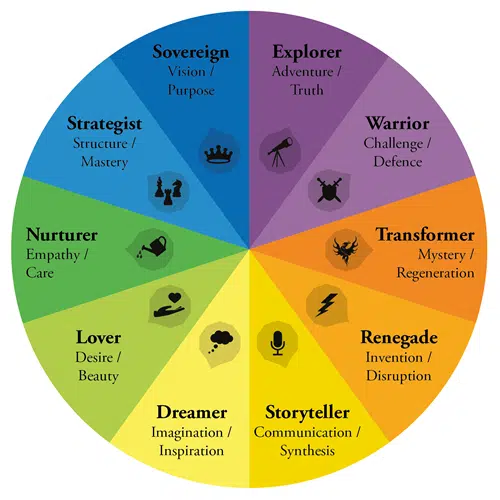
In the search for a fulfilling life and authentic relationships, every man faces a fundamental question: "What does it mean to be a real man?" The answer, often hidden in the depths of human psychology and history, is found in the concept of archetypes.
archetypes, as he described them Carl Jung, are universal and instinctive patterns that influence our behavior, thinking, and perceptions. They are more than just roles; they are profound forces that shape our personality and our path in life. In this article, we will explore masculine and feminine archetypes, shedding light on how they can guide and enrich our personal and relational journey.
For today's youth, understanding these archetypes is crucial. We live in a world that often presents masculinity and femininity in simplistic or stereotypical terms. Carl Jung invites us to look beyond these boundaries, offering a deeper and more complex perspective. They help us discover our inner strength, understand our partners, and build more harmonious and authentic relationships.
So, if you are on the path of self-discovery, or simply curious to learn more about the inner dynamics that guide us all, this article is for you. Let's explore the fascinating universe of archetypes together!
🔊 So discover how you can reach balance with women much easier! Learn the art of seduction! Sign up for a session now FREE 1-on-1 to learn the secrets of successful dating.
The Fundamentals of Archetypes
What are archetypes?
Archetypes, a concept introduced and developed by Swiss psychiatrist Carl Jung, are universal psychic structures that govern our behaviors, beliefs, and attitudes. Jung argued that they are inherited and manifest in myths, dreams, and even everyday behaviors. They are like “fingerprints” of common human experience, reflecting universal themes and scenarios.
They are fundamental concepts in analytical psychology. They represent universal and instinctive patterns of behavior and thought that are part of the collective unconscious.
Definition
Archetypes are inherent psychological patterns, or "primordial patterns," that form the structure of the collective unconscious—a repository of shared human experiences and traditions. They are not physically inherited, but are mental forms and themes that develop separately and individually within each person.
The role of archetypes in psychology
Jung considered them essential tools for a deep understanding of the human mind. They are seen as motivational forces that, in various forms and at different levels, influence our thoughts, feelings, and actions.
Common examples
There are numerous archetypes, but some of the most well-known include the Hero, who faces obstacles and fights for a noble cause; the Great Mother, a symbol of fertility and protection; the Magician or Sage, a symbol of knowledge and wisdom; and the Trickster, often a trickster or creator of chaos.
Influence in culture
Archetypes are present in mythology, religion, fairy tales, and even contemporary popular culture. They form the basis of many stories and characters, providing a common frame of reference for understanding universal human experiences.
Using archetypes in personal development
Understanding and working with archetypes can be used in personal growth and psychology.therapiesThey offer a way to explore the depths of the psyche, helping us to better understand our motives and behaviors.
Archetypes, by their universal and profound nature, help us connect to a common human experience, providing a symbolic language to explore and express the deeper aspects of our selves.
The role of archetypes in modern psychology
They are not just abstract concepts; they have a practical role in our lives. They help us understand and navigate the complexity of human experience, providing a framework through which to interpret both our own behaviors and those of others. In psychotherapy, for example, working with archetypes can help uncover and heal hidden aspects of the self.
Archetypes and popular culture
They are also visible in popular culture. From mythological heroes to modern characters in films and books, they shape narrative structure and characterization. By understanding archetypes, we can gain deeper insight into why certain stories resonate so strongly with us.
How do we identify archetypes in our lives?
To identify the archetypes active in your life, it is helpful to notice recurring themes in your dreams, interests, and relationships. For example, do you always find yourself in the role of protector (the Hero archetype) or as the bringer of change (the Magician archetype)? Recognizing these patterns can help you better understand your motivations and actions.
Identifying in our lives can be a profound process of self-discovery, helping us to better understand our behaviors, motivations, and relationships. Here are some steps to recognize and work with personal archetypes:
1. Reflection and Self-observation
- Analysis of behaviors and thoughts: Reflect on recurring patterns in your thoughts and behaviors. For example, are you always the one who takes the initiative and leads (the King or Hero archetype) or are you more of an advisor and guide to others (the Sage archetype)?
- logging: Writing down your thoughts and feelings can help to highlight active archetypes. Pay attention to recurring themes or characters that appear in your dreams.
2. Analysis of relationships and interactions
- Roles in relationships: Observe how you behave in different relationships. Are you the protector (the Parent archetype) or the empathetic partner (the Lover archetype)?
- Reactions and interactions: Reflect on how you react in certain situations. Are you impulsive and adventurous (the Hero archetype) or calm and reflective (the Sage archetype)?
3. Exploring interests and passions
- Favorite activities: What types of activities appeal to you the most? Creativity and art may indicate the presence of the Creator archetype, while a passion for problem-solving may reflect the Sage archetype.
- Favorite stories and characters: The characters and stories that resonate with you can provide clues about your dominant archetypes.
4. Meditation and dream work
- Meditation: The practice of meditation can help connect with deeper aspects of the self and recognize archetypes.
- Dream analysis: Dreams can be a window into our unconscious. Understanding them can provide clues about the archetypes that are active in your life.
5. Requesting feedback
- Discussions with relatives: Conversations with friends or family members about how they perceive you can provide new perspectives and help identify your archetypes.
Identity is an ongoing and evolving process. It is important to approach this journey with openness and curiosity, allowing yourself to explore and accept the different aspects of your personality. Through this process, you can gain greater self-understanding and navigate life more effectively.
🔊 So discover how you can reach balance with women much easier! Learn the art of seduction! Sign up for a session now FREE 1-on-1 to learn the secrets of successful dating.
Masculine archetypes
Exploring masculine archetypes
In every man's journey, certain archetypes manifest more strongly, influencing how he perceives and interacts with the world. Knowing them is essential for developing a healthy and balanced identity.
They are deep psychological patterns that represent various aspects of masculinity. These archetypes, described in the works of Carl Jung and other psychologists, influence men's behavior, perceptions, and relationships.
1. hero
It symbolizes courage, strength, and determination. It is one who faces challenges and fights to achieve a noble goal.
- Features: Brave, determined, protective.
- Example in Daily Life: An individual who takes the initiative in difficult situations or who defends causes in which he believes.
2. The King
It represents authority, order, and responsibility. It is a leader and an administrator.
- Features: Authoritarian, visionary, fair.
- Example in Daily Life: A manager or parent who guides and protects, ensuring the harmony and smooth functioning of the group or family.
3. Magician
It symbolizes wisdom and knowledge. It is the master of transformation and deep understanding.
- Features: Wise, intuitive, transformative.
- Example in Daily Life: A mentor or consultant who offers advice and new perspectives.
4. Lover
It represents passion, empathy, and connection. It is the symbol of love, beauty, and creativity.
- Features: Passionate, empathetic, creative.
- Example in Daily Life: A devoted partner or an artist who expresses their feelings through art.
Masculine archetypes provide a window into a deeper understanding of masculinity and the roles of men in society. By exploring and integrating these archetypes, men can more effectively navigate their personal and relationship lives, achieving a balance between strength and sensitivity.
Other significant masculine archetypes
1. The Warrior
- To define: The warrior symbolizes strength, courage, and discipline. He is the protector and fighter, characterized by strong will and determination.
- Role in Personal Life: The Warrior encourages confronting life's challenges, cultivating resilience and the ability to cope with adversity.
2. The Hunter
- To define: The Hunter represents focus, strategy, and the ability to pursue a specific goal. He is always looking for a new adventure or challenge.
- Role in Personal Life: Helps develop persistence and the ability to pursue long-term goals.
3. The Advisor
- To define: The advisor is wise and a counselor. He offers guidance and advice, drawing on his vast experience and knowledge.
- Role in Personal Life: Contributes to increasing wisdom and the ability to provide support and advice to others.
4. The Creator
- To define: The Creator is the symbol of innovation and creativity. He is the artist, the inventor, the one who brings new ideas and concepts to life.
- Role in Personal Life: Stimulates creativity, imagination and innovation in approaching different aspects of life.
5. The Hermit
- To define: The hermit represents introspection and self-searching. He is often a seeker of truth, dedicated to meditation and contemplation.
- Role in Personal Life: Encourages introspection, self-knowledge and spiritual development.
6. The Rebel
- To define: The rebel is the symbol of change and innovation. He defies norms and conventions, seeking to create new paths and perspectives.
- Role in Personal Life: Promotes change, innovation and unconventional thinking.
Integrating archetypes into everyday life
To have a balanced life, it is important to recognize and integrate these archetypes into our lives. The balance between the courage of the Hero, the wisdom of the Magician, the stability of the King, and the passion of the Lover can lead to a fulfilling life.
- Emotional balance and health: Understanding and balancing these archetypes can lead to better emotional health and a more harmonious relationship with oneself and others.
- Self-reflection and awareness: Identifying dominant archetypes and those that require development can help with better self-knowledge and personal growth.
How to use archetypes for personal development?
Identifying the dominant archetypes in your personality can help you understand both your strengths and weaknesses. For example, if you identify strongly with the Hero, you could work on developing your Lover side to balance action with empathy and connection.
- Relations: Recognizing masculine archetypes in relationships can improve communication, understanding, and connection.
- Society: Masculine archetypes influence social and cultural norms related to the roles and expectations of men.
Feminine archetypes
The importance of feminine archetypes
To fully understand masculinity, it is essential to recognize and appreciate feminine archetypes. These are not only important for women, but also provide valuable insight for men in their relationships with women and in their own personal journeys.
They are fundamental concepts in analytical psychology, representing different aspects and qualities of femininity. These universal models help to understand the behaviors, emotions, and roles of women in society and in their personal lives.
1. Regina
Symbolizing power, authority, and dignity, the Queen is the leader, the inspirer, and the one who maintains balance and harmony.
- Features: Authority, balance, grace.
- Example in Daily Life: A woman who leads wisely, whether in the family or in a professional context.
2. Mama
Representing care, nourishment, and protection, the mother is the source of life, unconditional love, and support.
- Features: Caring, protective, empathetic.
- Example in Daily Life: A woman who provides support and emotional warmth to those around her.
3. The wise one
It symbolizes knowledge, intuition, and wisdom. It is the guide, the advisor, and often the mediator.
- Features: Wisdom, intuition, insight.
- Example in Daily Life: A woman who offers advice based on experience and deep understanding.
4. Mistress
It represents passion, creativity and sensuality. It is the source of beauty, pleasure and inspiration.
- Features: Creative, passionate, inspiring.
- Example in Daily Life: A woman who freely expresses her creativity and passion.
By exploring feminine archetypes beyond the classic ones such as the Queen, the Mother, the Wise One, and the Lover, we can discover other symbolic patterns that reflect different aspects of feminine experience and expression.
Other significant feminine archetypes
1. Priestess or Priestess
- To define: The priestess represents spirituality, mysteries and hidden knowledge. He is the guardian of mystery and ritual.
- Role in Personal Life: Encourages connection with the spiritual side, introspection, and exploration of the mysteries of life.
2. The Warrior
- To define: The warrior symbolizes strength, courage and the fight for justice. She is the defender of principles and values.
- Role in Personal Life: Promotes resilience, courage, and the ability to fight for what is right.
3. The Witch or Maga
- To define: The Witch represents wisdom, magic, and transformation. She is the one who knows the laws of nature and the mysteries of life.
- Role in Personal Life: Stimulates deep understanding of the world and the use of knowledge for change and healing.
4. The Artist or Creator
- To define: The artist symbolizes creativity, artistic expression and inspiration. She is the source of beauty and innovation.
- Role in Personal Life: Encourages creative expression and exploration of new forms of art and beauty.
5. The Explorer or Adventurer
- To define: The Explorer represents curiosity, adventure, and discovery. She is always in search of new experiences and horizons.
- Role in Personal Life: Promotes exploration, curiosity, and openness to new experiences and knowledge.
6. The Guide or Mentor
- To define: The mentor is the guide and mentor. She offers advice, support, and guidance based on her experience and wisdom.
- Role in Personal Life: Contribute to the development of others by sharing knowledge and experience.
The interaction of feminine and masculine archetypes
Understanding these feminine archetypes helps us establish more harmonious relationships and connect more deeply with our partners. Men can also learn to integrate aspects of these archetypes into their own personality, balancing masculinity with sensitivity, empathy, and understanding.
The interaction between feminine and masculine archetypes is an essential aspect in understanding relational and personal dynamics. This interaction refers not only to relationships between men and women, but also to the inner balance of these energies within each individual.
Inner harmony
- Yin and Yang balance: Within every person there is a combination of feminine and masculine qualities (Yin and Yang). Their balance and harmonious integration lead to a more balanced and whole person.
- Self-knowledge and Personal Development: Recognizing and working with both sets of archetypes can facilitate better self-understanding and promote personal growth.
In relationships
- Partnership Dynamics: In relationships, each partner brings a unique combination of masculine and feminine archetypes. A deep understanding of these can improve communication, empathy, and emotional connection.
- Balance and Complementarity: Harmonious relationships are often the result of a balance and complementarity between the masculine and feminine archetypes of partners.
The role of feminine archetypes in a man's personal development
For a man, recognizing and respecting the feminine archetypes in his life can lead to greater self-awareness and the development of qualities such as empathy, caring, and creativity. This does not mean losing masculinity, but enriching and completing it.
Integrating archetypes into personal and relational life
Applying archetypes in personal development
Consciously integrating these into our personal lives can have profound effects on our emotional and psychological development. Whether it is embracing the courage of the Hero, the wisdom of the Magician, the stability of the King, or the sensitivity of the Lover, each archetype brings with it unique qualities that can enrich our life experience.
- Self-reflection: Identify which archetypes are most active in your life and which ones you could develop more. This process of self-reflection can help you better understand your own behaviors and make more balanced choices.
- Exercises and Practices: Try exercises that help you connect with different archetypes. For example, journaling, meditation, or even creative pursuits can serve as ways to explore different aspects of your personality.
Improving relationships through archetypes
They can also provide us with the key to understanding and improving our relationships. By recognizing the archetypes active in our partners, we can develop better empathy and communication.
- Empathy and Understanding: Learn to recognize and appreciate the archetypes active in your partners. This can help you better understand their needs and behaviors, facilitating more open and deeper communication.
- Balance and Harmony: Strive to find a balance between masculine and feminine archetypes in your relationships. This balance can lead to healthier and more harmonious relationships.
The Masculine Archetypes by Robert Moore
Robert Moore is a psychologist and author who developed a theory of masculine archetypes in collaboration with Douglas Gillette. They have written several books on the subject, most notably “King, Warrior, Magician, Lover: Rediscovering the Archetypes of the Mature Masculine,” in which they presented four fundamental masculine archetypes. These archetypes represent essential aspects of mature and healthy masculinity, and are used to help men understand and develop various aspects of their masculine identity. Here is an overview of the four masculine archetypes proposed by Robert Moore:
- The King: This archetype represents authority, wisdom, and the ability to make good decisions for the common good. The King is a wise and balanced leader who takes responsibility for those around him and uses his power justly.
- The Warrior: This archetype symbolizes strength, courage, and determination. The warrior is the protector and fighter for the right cause. He is dedicated to values and principles and is willing to take risks to defend them.
- The Magician: The Magician is the archetype of inner wisdom, deep knowledge, and personal transformation. He is able to see beyond appearances and bring light to the dark areas of the psyche. The Magician aids in personal growth and development.
- The Lover: This archetype symbolizes passion, connection, and relationships. The Lover is often associated with intense feelings and the ability to love and connect deeply with others. He represents the balance between giving and receiving in relationships.
Conclusions
Archetypes, both masculine and feminine, are more than just labels; they are powerful tools for self-discovery and personal growth. By understanding and integrating them into our lives, we can pave the way to a more balanced, fulfilling life and deeper relationships.
🔊 So discover how you can reach balance with women much easier! Learn the art of seduction! Sign up for a session now FREE 1-on-1 to learn the secrets of successful dating.