
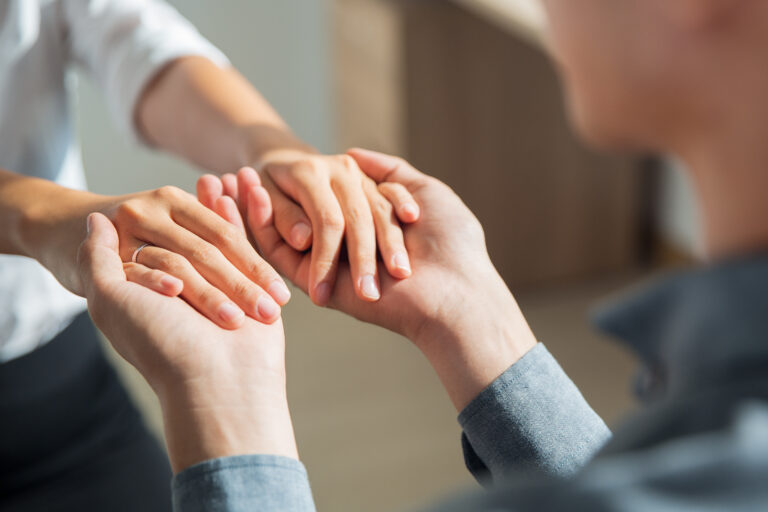
In a hectic and stressful world, we often face conflicts and misunderstandings in our relationships with those around us. And although it can be difficult to find a solution to these problems, the ability to be empathic can be a powerful tool in improving our relationships and communication. Empathy allows us to put ourselves in the shoes of others and better understand their perspective, which can help create a more harmonious and understanding environment in our daily lives.
But what exactly is empathy? We've all heard the term, but we know too little about it to pay attention to it in our lives and realize that it could be the solution we've been looking for. So let's learn more and see how we can use it!
What is empathy??

Empathy is the ability to recognize, understand, and share the thoughts and feelings of another person, animal, or fictional character. Developing empathy is crucial for establishing relationships and behaving compassionately.
This involves experiencing another person's point of view, rather than just your own, and allows for prosocial or helping behaviors that come from within, rather than forced ones.
When you can understand where other people are coming from, it becomes easier to treat them with compassion and kindness, which can lead to stronger and more satisfying relationships based on mutual understanding.
If we have little empathy, we can end up focusing only on ourselves and our own happiness, which tends not to be good for well-being. But when you work to improve the experiences of others, you are more likely to experience a more satisfying sense of happiness.
Types of empathy
Cognitive empathy
Cognitive empathy means knowing and understanding someone else's problem on an intellectual level, without taking on your own emotions. It allows you to respond to another person's emotions in terms of logic rather than feelings. It is a form of emotional intelligence, which we use to identify and manage our own emotions, as well as the emotions of others.
Emotional intelligence includes three essential skills:
- Achieving emotional awareness, or the ability to identify and name one's own emotions.
- Harnessing these emotions and applying them to tasks such as thinking and problem solving.
- Managing emotions, which includes both regulating your own feelings and helping others do the same.
To exercise this type of empathy, a person must be able to identify different emotions, manage them, and apply thinking skills to modulate both their own feelings and those of another person.
Cognitive empathy is an essential emotional intelligence skill for leaders and professional success. However, the same principles apply in all areas of life, whether at work or at home.
A great way to improve your cognitive empathy is to start with an awareness exercise. Grab a notebook or journal and do the following:
- Observe your thoughts without judgment for a week.
- Replace negative or anxious thoughts with encouraging thoughts.
- Set aside 15-20 minutes every day to rest your mind.
- Turn up the volume of your intuition and listen more carefully.
- Practice reflective listening with family and friends or coworkers.
Emotional empathy
Emotional empathy is the ability to feel what another person is feeling and to figuratively put oneself in their shoes. Some people can do this naturally and are often described as empathetic or highly sensitive people.

An empath is someone who experiences the emotions of others, sometimes to an extreme, and who struggles to intellectualize their feelings. Similarly, a highly sensitive person is someone who feels too much, too intensely. Their nervous system processes information endlessly, which can lead to them becoming overstimulated by their environment. Empaths and highly sensitive people can also absorb the emotions of people who do not express them.
If you struggle to maintain close emotional relationships, you may need to work on developing emotional empathy. Fortunately, you don't have to be empathetic to have emotional empathy. It's a skill that can be learned.
Try some of these techniques:
- Put yourself in their shoes:
Before you answer, ask yourself: "What would I do if I were in the other person's situation? How would I feel?"
- Don't react by blocking your feelings:
Blocking feelings is a common response to someone else's emotional crisis in order to help the other person feel better quickly or to avoid feeling uncomfortable ourselves. These are instinctive reactions, such as expressing pity, coming to the rescue, or denying that the other person's emotion or problem is legitimate.
- Construct an empathetic response:
The next time a friend vents to you about a problem, try to:
- You see the world as he sees it;
- Commit to not judging;
- Try to understand the other person's feelings;
- Communicate that you understand these feelings;
- Be curious if you don't understand;
Somatic empathy
Somatic empathy refers to the ability to feel the physical sensations of others in one's own body. It is a type of empathy that involves the sensory and motor systems, rather than just the emotional or cognitive systems.
For example, if you see someone being hurt, you may wince or feel a stab of pain in the corresponding part of your body. Or, if you see someone being hugged, you may feel a sense of warmth or comfort in your own body.
Somatic empathy is thought to be based on mirror neurons, which are specialized brain cells that fire when we observe the actions or experiences of another person. These neurons help us understand and relate to others by allowing us to simulate their experiences in our own bodies.
While somatic empathy can be a valuable tool for understanding and connecting with others, it can also be overwhelming or stressful if we are unable to regulate our own emotional reactions. It is important to practice self-care and boundary setting to prevent emotional exhaustion when using somatic empathy in our interactions with others.
Characteristics of empathetic people
There are several signs that indicate that a person is empathetic, and these are the following:
I am fully present with others.
Empathetic people have a way of making you feel like you're the only one in the room. When they interact with someone, they give that person the gift of their full attention and respect, which is rare in today's hyper-distant world.

I master the art of active listening.
To truly support someone, you must first understand that person. Empathetic people take the time to understand their counterpart's priorities, preferences, and motivations. This involves listening without judgment and leaving your assumptions at the door.
I don't interrupt people who are speaking.
In an effort to be helpful, we often step in to finish people's sentences, offer advice, or interrupt them. Empathetic people know how powerful silence can be. They don't interrupt or talk over other people. They think before they speak.
I replace giving advice with asking questions.
Instead of giving their opinion, empathetic people ask questions to better understand another person's perspective, such as:
- What do you think about this?
- Can you tell me more?
- What do you mean?
- What would be helpful?
- What do you think about this?
I speak in terms of "we", not "I"
Empathetic leaders move on to talking about how they will approach challenges as a team – speaking in terms of “we” and “us” – so that other people feel empowered and supported.
Imagines the point of view of others
Empathetic people practice a skill called “perspective taking.” In other words, they put themselves in the shoes of others to imagine what fears they might face.
Many empaths are introverts
Empaths become overwhelmed in crowds, which can amplify their empathy. They tend to be introverted and prefers individual contact or small groups.
Empaths are very intuitive.
Empaths experience the world through their intuition. It is important for them to develop their intuition and listen to their instincts about people. This helps empaths find positive relationships and avoid energy vampires.
How to develop empathy in your relationships?
It can be difficult to be empathetic to your partner in every situation or every time. But practicing empathy in your relationship can be the glue that holds it together.
If you feel like there's room for more empathy in your relationship, these tips for becoming more empathetic can help:
Slow down the pace.
Sometimes, you may be “too busy” to notice some of your partner’s needs. You may not be aware that you are missing something, and taking a break can give you that chance.
A good first step to doing this includes:
- Leave work at work
- Saving chores for specific times
- Doing household tasks together
- Putting devices away when you're in bed together
Practice active listening.
Active listening means more than just paying attention to what your partner is saying. It also involves:
- Processing what is said
- Reflecting on the answer
- Finding a bridge of validation that makes you both feel connected and supported
Heal thyself
Practicing empathy in a relationship may require each person to work on themselves first.
Working on yourself can involve:
- Starting therapy
- Joining support groups
- Practicing relaxation techniques
- Processing emotions with the help of a journal
Focus on solving your problems, if you don't want to project them onto your partner and destroy the relationship.
The possible dangers of empathy?
Here are the possible negative effects of empathy:
Feel the emotions of others
Like most things in life, there are both positive and negative aspects to the ability to more acutely detect and directly experience the feelings of others.

Directly experiencing the emotions of those around you, but without having the ability to choose what you feel, is potentially dangerous and can be very tiring, both emotionally and psychologically, leaving you struggling with pain and confusion.
Your capacity to be overwhelmed is great.
Empaths tend to be very sensitive in general. This means that not only do they have no filter to reject the feelings of others, but they also become more easily overwhelmed by loud noises and crowded social environments.
The combination of these two things makes empaths frequently susceptible to panic attacks and general feelings of overwhelming in crowded or noisy environments.
For the same reason, watching the news can be very stressful. Stories of tragedy and destruction are deeply felt and are often too much to bear.
How to temper empathy to avoid emotional hurt?
So how can you protect yourself from emotional distress and differentiate yourself from the suffering friend or family member in your life, without becoming indifferent to that person? How can you nurture empathic concern and better navigate empathic distress? Here are some strategies:
Identify the feeling
When you're sensitive to other people's energy, it can be difficult to know if what you're feeling is yours or someone else's. Identifying the feeling can help you do this. If you were having a great day and then someone joined you and you started to get angry, it may not be yours.
Being able to differentiate and name feelings can help you figure out which feelings belong to you and which might belong to someone else.
Be self-aware.
Self-awareness is important when you are sensitive to other people's feelings. Recognize your need for alone time. Spend time with your own emotions. Allow your feelings to be without judgment.
Also, become aware of what brings you feelings of joy. When you are more aware of your own feelings, states, and triggers, it is easier to recognize when you are receiving someone else's energy. Greater self-awareness will allow you to cultivate different ways of recognizing emotions that are not yours without absorbing them.
Visualize a glass wall
There are a number of techniques you can use to keep other people's energy separate. One technique involves visualizing a glass wall between you and the other person. The glass wall allows you to see the other person's emotions. However, emotions are not able to penetrate the wall. When they hit the wall, they bounce back to the other person, not you. You can see and acknowledge the feelings, but you cannot absorb them.
This technique can also work in large crowds. You can imagine that you are surrounded by a glass wall as you move through the crowd.

Be curious
When it’s easier to pick up on someone else’s feelings, you may also think you understand how they’re feeling. Even if your assumptions are correct, sometimes people just want to be heard. Being curious about the other person, what they’re feeling, and how it’s affecting them can help you separate what they’re feeling from what you’re feeling. Instead of assuming someone else’s bad mood, you can ask them questions about what they’re feeling. Gaining a deeper understanding of what the other person is going through and why can help keep your own feelings separate, no matter how empathetic you are.
Set strong boundaries
If you are an empath, it is very important to have strong boundaries. Because it is natural for you to understand and empathize with others, you could easily become a dumping ground for their negative emotions.
It is essential to know yourself and what you are and are not able to handle. You may need more alone time than others to feel energized. Certain people and situations may be particularly draining for you, and you may need to limit your exposure to them. Effective boundaries help you set limits based on your own needs, feelings, and energy levels.
Release the emotion
Even if you incorporate all of the above, if you are naturally sensitive to the emotions of others, there will be times when you will absorb them. When this happens, you can use another visualization technique to help you not get overwhelmed. To do this, you can imagine leaves floating on a stream. Imagine that the feeling you have absorbed is being transferred onto a leaf. As the leaf moves down the stream and out of sight, the feeling goes with it, and you are left with the calm of the flowing water.
Why can't some people be empathetic?
Empathy exists on a spectrum and, in most cases, it is not completely absent, it is just diminished.
In some cases, due to illness or trauma, some people may have extremely low empathy and a diminished capacity to develop it. However, they still have this capacity.
Everyone can experience low empathy at times. For example, it may be natural to have difficulty feeling and expressing empathy for someone who has hurt us. However, some of the possible factors associated with low empathy include:
- Personality and developmental disorders
- Narcissistic personality disorder
- Machiavellianism
- Sociopathy or antisocial personality disorder
- Borderline personality disorder
- Alexithymia
- Autism
How does a lack of empathy affect us?
Lack of empathy can affect us in many different ways, such as:
- Social relationships: A lack of empathy can make it difficult to create and maintain healthy relationships with others because it does not allow us to feel and understand the emotions and perspectives of others.
- Communication: A lack of empathy can make it difficult to communicate effectively with others, as we may not be able to consider others' perspectives or accurately perceive how they are feeling.
- Mental health: Lack of empathy can affect our mental health, as it can lead to social isolation, feelings of loneliness, and contribute to the development of mental health problems such as antisocial personality disorder.
- Aggressive behavior: Lack of empathy can lead to aggressive and violent behaviors because we may not be able to understand how our actions affect others and control our impulses.
Characteristics of empathy
Empathy is the ability to understand and feel the experiences, feelings, and perspectives of other people. Characteristics of empathy include:
- Perspective taken: The ability to see a situation or event from another person's perspective. This involves the ability to imagine how someone else might feel or think in a given situation.
- Active listening: Listening attentively and with an open mind to what the other person is saying, without judging them. Active listening involves sincere interest in the perspectives and feelings of others.
- Efficient communication: The ability to effectively communicate one's own feelings and thoughts, as well as to understand and respond to the emotional communication of others. This includes the use of nonverbal language, such as facial expressions and body language.
- Emotional resonance: The ability to feel and share the emotions of other people. It involves not only understanding but also feeling the emotions of others to some extent.
- Acceptance and tolerance: The ability to accept and tolerate differences and diversity in thinking, experiences, and feelings. It involves respect for the individuality of each person.
- Compassion: The feeling of compassion and the desire to help or provide support to those going through difficult times. It manifests itself not only through understanding, but also through supportive actions.
- Self-awareness: The ability to be aware of one's own emotions and understand how they can influence one's perception of others. A good understanding of oneself can facilitate the development of empathy.
- Social skills: The ability to navigate social interactions, identify the needs and expectations of others, and respond appropriately. Empathy is closely linked to social skills and emotional intelligence.
Empathy can vary in intensity and can be developed through practice and awareness. It is an essential quality in interpersonal relationships and in improving the quality of communication.
Can anyone be empathetic?
Yes, in general, anyone can develop and practice empathy. Empathy is not a skill exclusive to certain individuals or groups, but can be cultivated and improved by anyone who is willing to dedicate time and effort to developing it. It is important to note that levels of empathy can vary from person to person, and that there are individual differences in the ability to feel and understand the emotions of others.
There are several factors that can influence the development of empathy, including:
- Life experiences: People who have gone through similar experiences to others may be more likely to show empathy towards those people.
- Education and culture: Cultural context and upbringing can play a significant role in the development of empathy. The values and teachings passed down in a particular culture can influence how people perceive and respond to the emotions of others.
- Awareness and practice: Awareness of one's own emotions and those of others, along with practice in active listening and in putting empathy into practice, can contribute significantly to the development of this skill.
- Opening up to the perspective of others: The ability to open your mind and heart to other people's perspectives can facilitate understanding them and developing empathy.
While some people may have a natural predisposition toward empathy, it is an aspect of human behavior that can be improved and developed throughout life. Through practice, self-awareness, and consistent effort, anyone can become more empathetic.
Are women more empathetic than men?
There is no conclusive evidence to support the idea that women are inherently more empathetic than men or vice versa. Empathy is not determined solely by gender, but is influenced by a complex combination of factors, including education, life experiences, cultural and social background, and the individual characteristics of each individual.
Studies have suggested that there are significant individual variations in levels of empathy and that these are not exclusively related to gender. For example, some research indicates that women may, on average, be slightly more likely to exhibit empathetic behaviors, but these differences are not constant and can vary depending on context and other variables.
It is important to avoid generalizations and recognize the diversity among individuals. There are men who are highly empathetic and women who may not exhibit the same ability to a similar extent. In addition, culture and society can play a significant role in shaping expectations of empathetic behavior by gender.
In conclusion, empathy is a complex human trait and can be developed and improved regardless of gender. It is important to approach this quality in an individualized way, recognizing and valuing diversity in the manifestation of empathy.
At what age do you become empathetic?
The development of empathy begins early in life, and the ability to show empathy develops as children grow and interact with their environment. Here's a brief look at the evolution of empathy at different stages of life:
- Sugar:
- Very young children can show reactions to the emotions of those around them, but these reactions are rather instinctual and do not necessarily indicate empathy in the full sense of the term.
- Preschool:
- During this period, children begin to develop social skills and begin to better understand the emotions of others. They can demonstrate empathy in the simple sense of caring and responding positively to the emotional state of others.
- Primary school:
- At this stage, children become more aware of the perspectives and feelings of those around them. They begin to learn to see situations from other people's points of view and express empathy more consciously.
- Adolescence:
- The ability to understand other people's emotions and perspectives continues to develop. Teens may develop more complex empathy and better understand social nuances and contexts.
- Grown ups:
- Empathy continues to develop and refine as people age and gain life experiences. In adult life, empathy can be influenced by various circumstances, including personal experiences and developments in relationships.
It is important to note that the development of empathy can vary considerably from one person to another and that it can be influenced by different factors, such as family environment, education and social interactions. Empathy is a skill that can be cultivated and improved throughout life.
The link between empaths and anxiety
Empathetic people, that is, those who have an increased ability to understand and feel the emotions of others, may have a predisposition to anxiety for several reasons:
- Taking on the emotions of others: Empathetic people can pick up on and feel the emotions of others to a greater extent. This can lead to additional emotional burden, which can contribute to feelings of anxiety.
- Responsibility towards others: Empaths may feel a strong sense of responsibility for the emotional state of those around them. Trying to help and improve the state of others can create emotional pressure, contributing to anxiety.
- Absorbing stress from the environment: Empaths may be more susceptible to absorbing stress from their environment. This can affect their anxiety levels, especially if they are exposed to stressful situations or people with intense emotional states.
- Fear of rejection or failure: Empaths may have a heightened sensitivity to feedback and reactions from others. Fear of not being accepted or of failing to help others can generate anxiety.
- Overthinking and excessive analysis: The ability to understand the perspectives and emotions of others can bring with it a propensity for overthinking and overanalyzing situations, which can contribute to anxiety.
It is important to emphasize that although empathy can be associated with anxiety in certain circumstances, it does not automatically cause anxiety. There are empaths who manage emotions well and avoid anxiety, and the ability to develop strategies for managing stress and emotional burden can be essential for maintaining a state of well-being. Counseling and anxiety management techniques can be helpful in these situations.
What happens if we lack empathy?
Lack of empathy can manifest itself in a variety of ways and can have significant impacts on relationships and social interactions. Some aspects associated with a lack of empathy include:
- Difficulty understanding others: A person with a lack of empathy may have difficulty understanding the perspectives, feelings, and experiences of other people. This can lead to misunderstandings and a lack of emotional connection in relationships.
- Difficulty in relationships: A lack of empathy can affect the quality of interpersonal relationships. A person who lacks empathy may appear insensitive or uncaring, which can lead to social distancing and difficulty forming and maintaining relationships.
- Lack of response to the needs of others: A person without empathy may not respond appropriately to the needs, joys, or suffering of those around them. This can create a sense of isolation and neglect in relationships.
- Difficulty in collaboration: In the workplace or within teams, a lack of empathy can make it difficult to collaborate effectively. The ability to understand and appreciate colleagues' perspectives can be essential to a harmonious work environment.
- Insensitive behavior: People with a lack of empathy may behave insensitively and fail to respond to the suffering or needs of those around them. This can lead to feelings of rejection and loneliness among those affected.
Lack of empathy can be influenced by various factors, including individual characteristics, life experiences, and social environment.
Conclusion
Now does it seem easy to you to be empathetic? Does it seem easy to you that through law of attraction even attract what is in your mind, but not realize if it belongs to you?
I want to solve my FEARSFrequently asked questions and answers
Q: Why is empathy important?
Empathy is important because it helps us understand and connect better with others, improve interpersonal relationships and communication, and develop compassion for the people around us.
Q: What is the difference between empathy and compassion?
Empathy refers to the ability to understand and feel what another person is feeling, while compassion refers to the feeling of concern and desire to help the person who is suffering. Also, empathy focuses on understanding and sharing feelings, while compassion involves actions that aim to alleviate the suffering of others.